Why does my house still smell like smoke after a fire
Smoke smell after a fire in Ventura lingers because soot particles lodge in walls, ducts, and insulation. Here is why it returns and how to remove it for good.
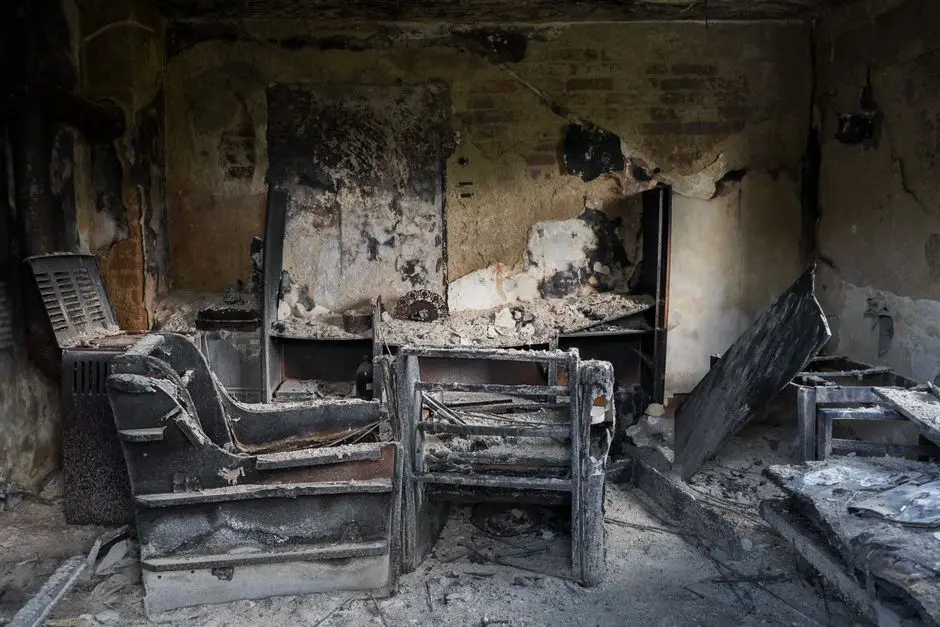
Your house still smells like smoke after a fire because the odor is not in the air - it is in the materials. Smoke leaves behind microscopic soot and char particles that lodge in drywall, insulation, ductwork, and fabric, and those particles keep off-gassing for months. In Ventura, where marine air and tight stucco construction trap moisture and fumes, that smell can outlast the visible damage by a year or more. Below we explain exactly where smoke hides, why it comes back after a cleanup, and what actually removes it.
Why smoke odor lingers after a fire in Ventura
Smoke odor lingers after a fire in Ventura because combustion does not just burn things - it deposits a sticky film of soot and volatile organic compounds on every surface the smoke touches. That film is the smell. Cleaning the air or wiping the counters does nothing to the particles that have already soaked into porous materials.
Three factors make it worse here than in drier inland cities. First, Ventura's coastal humidity keeps soot slightly tacky, so it bonds to walls and ceilings instead of drying and flaking off. Second, the area's older housing stock - much of it built between 1950 and 1980 in Midtown and along the avenues - has plaster and lath walls that absorb odor far deeper than modern drywall. Third, the same marine layer that makes Ventura pleasant keeps windows closed more often than residents realize, so smoke has nowhere to vent.
The result is a smell that seems to fade during the day and returns at night, or disappears for a week and then hits you when the heater kicks on. That pattern is not random. It is the odor source telling you it is still there.
The four places smoke hides in a Ventura home
Smoke hides in four places in a Ventura home: the building cavity, the HVAC system, soft contents, and the structural framing. Miss any one of them and the smell comes back. Here is what each looks like in practice.
1. Inside walls, ceilings, and insulation
Smoke travels through every gap in a house - outlet boxes, light switches, plumbing penetrations, and the top plates where walls meet the attic. Once inside the cavity, soot settles on the back of drywall and on fiberglass insulation. That is the source of what homeowners describe as smoke remediation VENTURA California crews find behind outlet covers weeks after a fire. If your smell is strongest in one room but the fire was in another, the cavity is usually the reason.
2. The HVAC system and ductwork
Every time the system runs, it pulls air from the house and pushes it back through the same ducts. Smoke that entered the return side during the fire coats the inside of the ductwork and the blower wheel. Running the heat or AC then redistributes that odor to every room. A duct system that has not been cleaned after a fire will keep a house smelling like smoke indefinitely, no matter how many times the floors are mopped.
3. Soft contents and furniture
Upholstery, mattresses, curtains, area rugs, and clothing act like sponges for smoke particles. So do the paper backing on cabinets and the particleboard inside inexpensive furniture. Many of these items can be saved with the right treatment, which is why we handle VENTURA fire-damaged furniture restoration rather than recommending replacement by default.
4. Structural framing and subfloor
Charred studs and joists continue to release odor long after the visible burn is gone. So does the subfloor under vinyl or tile. In older Ventura homes, the subfloor is often tongue-and-groove pine that has absorbed smoke from below. Sealing or replacing that material is the only permanent fix.
Why smoke smell returns after fire restoration
Smoke smell returns after fire restoration when the original cleanup treated the surfaces but not the source. This is the single most common complaint we hear from homeowners who hired a general contractor or a handyman to handle a small fire. The drywall got painted, the floors got cleaned, and for two weeks everything seemed fine. Then the weather turned, the heater came on, and the smell was back.
There are four reasons this happens:
- Odor was masked, not removed. Ozone machines, foggers, and scented products temporarily neutralize the smell. They do not remove the soot particles causing it.
- Porous materials were painted over. Paint seals some odor in, but heat and humidity eventually push it back through. Unsealed char on studs and sheathing will always win.
- The HVAC system was skipped. Ducts and the blower wheel are the most overlooked odor source in residential fire cleanup.
- The cavity was never opened. Soot behind drywall and inside insulation requires removing and replacing material, not cleaning it in place.
If your smell came back after a previous restoration, the fix is not another round of fogging. It is finding the source. That is the work our smoke odor removal VENTURA California team does on every job, and it is why we test with a thermal camera and a moisture meter before we quote anything.
How to remove smoke smell from your house in Ventura
Removing smoke smell from a house in Ventura takes a sequence: remove the source, clean what remains, seal what cannot be cleaned, and then verify. Skipping a step is why DIY attempts fail. Here is the order that works.
- Remove char and contaminated material. Anything burned, blistered, or heavily sooted comes out first - drywall, insulation, carpet, padding. This is the step most homeowners skip, and it is the one that matters most.
- HEPA-vacuum every surface. Soot particles are small enough to pass through a standard shop vac and land right back on the walls. A HEPA vacuum with a sealed filter captures them.
- Clean with the right chemistry. Soot from protein fires (kitchen grease) needs a different cleaner than soot from wood or electrical fires. Using the wrong one smears the residue and drives it deeper.
- Seal porous framing. A shellac-based primer on studs, sheathing, and subfloor locks remaining odor in. This is standard practice on every fire cleanup services VENTURA California job we run.
- Clean the HVAC system. Ducts, blower, evaporator coil, and return plenum. Replace the filter last, not first.
- Treat soft contents. Textiles get washed or dry-cleaned; furniture gets treated based on material. Do not put smoke-damaged items back into a clean room until they are odor-free.
- Verify before you close up. A smell test in each room with the HVAC running is the only way to confirm the source is gone.
For a typical 1,200-square-foot home with a contained kitchen fire, this sequence takes three to five days with a crew. A fire that reached the attic or the wall cavity takes longer, because more material has to come out.
Common mistakes that make smoke odor worse
The most common mistake homeowners make after a fire is trying to clean smoke odor before the source is removed. Wiping soot with a wet rag, for example, pushes it into drywall paper and makes the stain permanent. Here are the others we see most often in Ventura.
- Running the HVAC to "air out" the house. This spreads soot through every duct and every room. Turn the system off until the ducts are cleaned.
- Using a rental ozone machine in an occupied home. Ozone is a respiratory irritant and does not remove the source. It also does nothing for soot in walls.
- Painting over smoke-stained walls without sealing. Standard paint lets odor bleed through within weeks. A shellac or oil-based stain-blocking primer is required.
- Throwing away soft contents too early. Many smoke-damaged textiles and furniture pieces are restorable, and replacing them is far more expensive than cleaning them.
- Assuming a small fire means a small cleanup. A stovetop fire can push smoke through an entire house in minutes. The size of the flame is not the size of the odor problem.
One more: opening windows and running fans for a few days feels productive but does not address particles that have already bonded to surfaces. Ventilation helps during the cleaning process, not instead of it.
When to call a professional for smoke odor removal
Call a professional when the smell has lasted more than two weeks, when it returns after a cleanup, or when the fire involved the wall cavity, attic, or HVAC system. Those three situations almost always mean the source was not fully removed, and no amount of DIY cleaning will fix it.
We are a local Fire Damage Restoration company, and we handle smoke odor as part of the full repair - not as a standalone fogging service. Our technicians open the cavity, inspect the ducts, test materials, and remove what is contaminated before we clean and seal. If you are in Midtown Ventura Fire Damage Restoration California territory or anywhere else in the city, we can usually be on-site the same day to assess the source.
We also handle the structural side. If smoke got into the attic, the fix may involve fire structural restoration VENTURA California work - replacing sheathing, sealing framing, and restoring insulation. That is the difference between a house that smells clean and a house that is clean.
Frequently Asked Questions
Why does my house still smell like smoke after a fire in Ventura, California?
Because soot particles have soaked into porous materials - drywall, insulation, ducts, and fabric - and keep releasing odor. Ventura's coastal humidity makes soot cling to surfaces longer than in dry climates, so the smell can persist 6 to 12 months without proper source removal.
How do I remove smoke smell from my Ventura home?
Remove char and contaminated material first, HEPA-vacuum all surfaces, clean with the correct chemistry for the fire type, seal porous framing with shellac primer, and clean the HVAC system. Skipping the removal step is why most DIY attempts fail within two weeks.
Does smoke smell after a fire go away on its own in Ventura?
Rarely. Surface odor may fade in 2 to 4 weeks, but odor from wall cavities, ducts, and subfloor does not go away without removal or sealing. In our experience, homes that are not properly cleaned still smell like smoke a year later.
Who can remove smoke odor in Ventura California?
Fire Damage Restoration Ventura handles smoke odor removal as part of full fire restoration. We locate the source with thermal imaging and moisture meters, remove contaminated material, clean and seal, and verify the result before we finish.
How much does smoke odor removal cost in Ventura?
Typical 2026 pricing in Ventura runs $1,200 to $3,500 for a contained single-room fire, and $4,000 to $12,000 or more when the HVAC system and wall cavities are involved. The range depends on square footage, how far smoke traveled, and how much material must be removed.
Get help with Fire Damage Restoration in Ventura
If your house still smells like smoke, the source is still there - and it will not clear on its own. Call Fire Damage Restoration Ventura and we will find it, remove it, and verify the air is clean before we leave.
Call (833) 929-6186 for same-day assessment in Ventura.