How to prepare your Ventura home for wildfire season
A practical, Ventura-specific guide to wildfire season preparation: defensible space zones, home hardening, evacuation planning, and insurance steps that hold up when it counts.
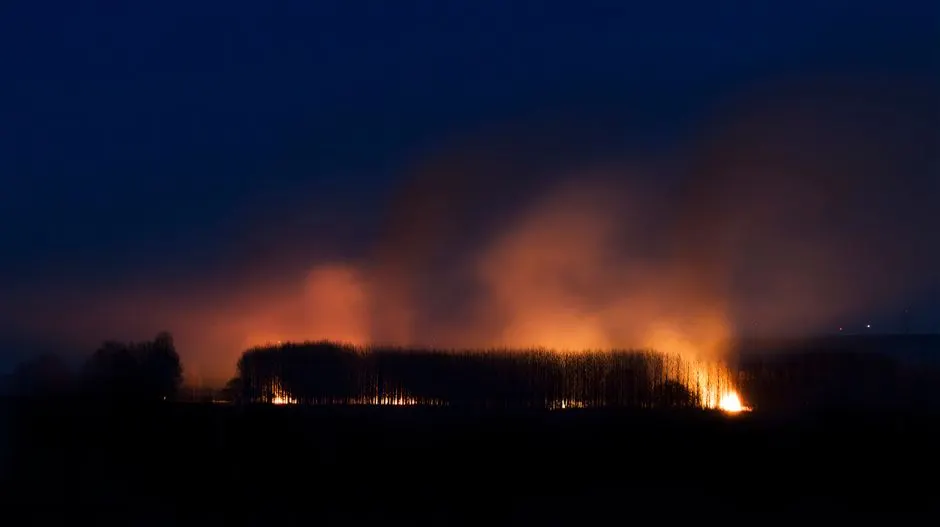
Preparing your Ventura home for wildfire season means clearing two zones of defensible space around the structure, hardening the roof, vents, and windows against embers, and having a written evacuation plan and current insurance documentation ready before the first red flag warning. In Ventura County, the work needs to be done by late spring because the dangerous window runs from October through January, when Santa Ana winds push dry air from the interior toward the coast.
What follows is the same sequence we walk homeowners through after a close call: what to clear, what to seal, what to pack, and what to photograph. It is specific to Ventura's building stock, its wind patterns, and the way insurance claims actually get paid here.
When is wildfire season in Ventura, California?
Wildfire season in Ventura, California peaks from October through January, when Santa Ana winds combine with the driest fuel moisture of the year, though the risk window now stretches from late spring through early winter. The Thomas Fire started in December 2017 and burned into Ventura city limits, which tells you everything about how late the danger runs here.
Two local factors drive that calendar. First, the Santa Ana wind events that push through the Santa Clara River valley and over the foothills above Ventura strip humidity into the single digits and gust past 60 mph. Second, the fuel load in the hills above Downtown Ventura and North Ventura builds every spring with grass and chaparral growth, then cures into tinder by September.
That means the practical deadline for most of this work is May or early June. Clearing brush in July is better than nothing, but you want the defensible space established before the grass dries and before the first wind event of the fall.
What is defensible space in Ventura, California?
Defensible space in Ventura, California is the managed buffer between your home and the grass, brush, and trees around it, divided into Zone 0 (0-5 feet), Zone 1 (5-30 feet), and Zone 2 (30-100 feet) under California's updated Chapter 7A framework. Each zone has different rules, and Zone 0 is the one most Ventura homeowners have not addressed yet.
Zone 0: the ember-resistant zone (0-5 feet)
This is the strip immediately against the house, and it is where embers do the most damage. Remove wood mulch, bark, and anything combustible within five feet of the foundation. Replace it with gravel, river rock, or concrete. Move firewood, propane tanks, and wooden planters out of this band entirely.
Do not plant anything within five feet of the wall. If you have a juniper or a rosemary hedge against the stucco, that is a wick, not landscaping.
Zone 1: lean, clean, and green (5-30 feet)
Keep grass mowed to 4 inches or less. Space shrubs so there is at least 10 feet between them and 10 feet between the lowest branch and the ground. Remove dead branches, leaves, and any tree limbs within 10 feet of the chimney or roof.
On slopes, extend the spacing. A slope above your house in the hills off Ventura Avenue will move fire faster than flat ground, so double the clearance on the uphill side.
Zone 2: reduced fuel (30-100 feet)
Thin trees so canopies are at least 10 feet apart, and remove ladder fuels - the low brush that lets fire climb from the ground into the tree crowns. If your property backs up to open space, this is the zone that buys firefighters time to defend the structure.
For homeowners in Fire Damage Restoration in North Ventura, where lots often run straight into the hills, Zone 2 maintenance is a yearly job, not a one-time project.
Wildfire home hardening tips for Ventura homes
Wildfire home hardening in Ventura means closing the ember entry points on the roof, vents, eaves, and windows, because 90% of homes lost to wildfire are ignited by embers, not by the flame front. The work is unglamorous and mostly cheap, and it matters more than any single landscaping decision.
- Roof: Class A assembly is the minimum. If you have wood shake, that is the single biggest liability on the structure. Replace it or at minimum treat it and keep the gutters clean of needles.
- Vents: Replace 1/4-inch mesh with 1/8-inch corrosion-resistant mesh on foundation, attic, and eave vents. Embers pass through 1/4-inch mesh.
- Eaves: Box in open eave overhangs. An open eave is an ember trap.
- Windows: Dual-pane tempered glass on the side facing the fuel load. Single-pane windows crack from radiant heat in under two minutes.
- Deck: Replace the first 5 feet of decking adjacent to the house with a noncombustible material, and never store anything under the deck.
- Garage: Weather-strip the garage door. An ember that gets under the door into a garage with stored fuel is a house fire.
None of this is exotic. Most of it is a weekend of work with a trip to the hardware store. If you have had a small fire already - a grill flare-up, an electrical fire in the garage - the cleanup and repair work overlaps heavily with hardening, and our team handles fire cleanup services VENTURA California alongside the rebuild so the structure goes back together tighter than it was.
How do I create a wildfire evacuation plan in Ventura?
Create a wildfire evacuation plan in Ventura by choosing two exit routes out of your neighborhood, designating a meeting point outside the fire zone, and packing a go-bag that stays in the car from September through January. Ventura's geography makes this more urgent than it sounds: the city has limited east-west arteries, and when the Ventura Freeway closes, surface streets back up fast.
- Two routes, not one. If you live west of downtown, know how to get out via Ventura Avenue and via the freeway. If you live in the hills, know which direction the wind is pushing the fire before you commit.
- Meeting point. Pick a spot outside the evacuation zone - a relative's house in Oxnard or Camarillo, a specific parking lot. Everyone in the household needs the address memorized, not just saved in a phone.
- Go-bag. Three days of medication, phone chargers, copies of insurance documents, pet food and carriers, a change of clothes, cash. Keep it packed and by the door.
- Vehicle. Keep the tank at least half full from September onward. Park facing out of the driveway.
- Register for alerts. Sign up for Ventura County's emergency alert system and know the difference between an evacuation warning and an evacuation order. A warning means go now if you can.
Practice the route once with the whole household, including pets. The night of an evacuation is not the time to discover the cat carrier is in the garage behind the holiday boxes.
Wildfire insurance preparation for Ventura homeowners
Wildfire insurance preparation in Ventura means documenting the house before anything happens, confirming your policy's wildfire coverage and replacement cost, and understanding that California's FAIR Plan is the insurer of last resort for many foothill properties. Do this in the spring, not the week a fire starts.
Walk every room with your phone and record a slow video. Open closets, cabinets, and the garage. Narrate what you see. That video is the difference between a claim that pays for contents and one that argues about them for eight months.
Then read the policy. Three numbers matter: dwelling coverage, contents coverage, and the wildfire deductible, which in Ventura County is often a percentage of the dwelling limit rather than a flat dollar amount. If your dwelling coverage is $600,000 and the wildfire deductible is 2%, your out-of-pocket on a total loss starts at $12,000.
Keep digital copies of the policy, the video, and the inventory in cloud storage and with a relative out of the area. If you have already been through a loss, our fire and smoke damage repair VENTURA California work includes the documentation package your adjuster will ask for.
Common mistakes in Ventura wildfire season preparation
The most common wildfire season preparation mistake in Ventura is treating defensible space as a one-time spring cleanup instead of a maintenance cycle that runs through the whole dry season. The second is focusing entirely on the hillside view and ignoring the five feet against the house.
- Clearing the back forty, ignoring Zone 0. Embers land against the wall. Wood mulch against stucco is the most common ignition point we see.
- Leaving the woodpile. A cord of firewood against the house is a pre-built fire. Move it 30 feet out or don't keep it.
- Forgetting the gutters. Pine needles and palm fronds in a gutter catch an ember and light the fascia.
- No video inventory. Without it, contents claims get negotiated down to whatever the adjuster estimates.
- Waiting for the order. By the time an evacuation order is issued, the roads are already congested. Leave on the warning.
- Assuming the policy covers everything. Many Ventura policies have separate wildfire deductibles and sublimits on landscaping and outbuildings.
If a fire does get close, the damage is rarely just flame. Smoke pushes through vents and attic spaces and leaves residue on every surface. Our smoke remediation VENTURA California crews handle that part of the job, and it is often the difference between a house that smells like a house and one that smells like a fire for years.
When to call a professional
Call a professional when the fire has touched the structure, when smoke has entered the HVAC system or attic, or when the insurance claim is large enough that documentation and scope matter as much as the repair itself. Small exterior fires and scorched siding can sometimes be handled by a good contractor, but anything that involves the roof assembly, the electrical system, or the air handler needs a restoration scope.
Fire Damage Restoration Ventura handles the assessment, the cleanup, the structural repair, and the documentation in one sequence, so you are not coordinating three trades and an adjuster on your own. If you are unsure whether the damage is big enough to call, call anyway - the assessment costs you nothing and the answer is usually clearer than you think.
Frequently Asked Questions
How do I prepare my Ventura home for wildfire season in California?
Clear Zone 0 within 5 feet of the house, maintain 100 feet of defensible space, harden the roof, vents, and windows against embers, pack a go-bag, and document the home for insurance. Start by late spring, before the fall wind events.
What is defensible space in VENTURA California?
Defensible space is the managed buffer around a home divided into Zone 0 (0-5 feet), Zone 1 (5-30 feet), and Zone 2 (30-100 feet), each with specific rules for vegetation, mulch, and fuel. It gives firefighters a safe area to defend the structure.
When is wildfire season in VENTURA California?
Peak wildfire season in Ventura runs October through January during Santa Ana wind events, though the risk window now extends from late spring through early winter. The Thomas Fire reached Ventura in December 2017, which shows how late the danger runs.
Does homeowners insurance cover wildfire in VENTURA California?
Standard California homeowners policies cover wildfire damage, but many Ventura policies carry a separate wildfire deductible that is a percentage of the dwelling limit - often 1% to 5%. Confirm your deductible and replacement cost before fire season.
How do I create a wildfire evacuation plan in VENTURA?
Choose two exit routes, set a meeting point outside the fire zone, pack a go-bag with medication and documents, keep the car half full, and register for county emergency alerts. Practice the route once with pets before fire season.
Get help with Fire Damage Restoration in VENTURA
If a fire has already touched your home, or you want a professional assessment of what needs hardening before the next wind event, our team is local and ready. We handle Fire Damage Restoration across Ventura from the first walkthrough to the final coat of paint.
Call (833) 929-6186 to schedule an assessment.